With the rise of renewable energy sources and increased consumption, the need to enhance grid capacity is more pressing than ever. One technology that sharpens grid performance and keeps power flowing steadily is Dynamic Line Rating (DLR). But how can we use it to enhance the grid capacity even more?
What is Dynamic Line Rating (DLR)?
Quick recap for everyone in the field. Dynamic Line Rating (DLR) was first designed to provide real-time data on the capacity of power transmission lines. By providing accurate and real-time data, DLR helps grid operators make informed decisions about load management, preventing overloading and reducing congestion. This way, utilities can maximize the use of existing infrastructure, enhancing grid capacity without the need for extensive new construction–because we all know there’s no time or money we can invest in this.
Conventional Static Line Rating vs. Dynamic Line Rating
Unlike traditional methods that rely on conservative, static ratings, DLR adjusts the ratings based on actual environmental and operational conditions. Below are three other things that help DLR beat SLR:
Simplicity
Static Line Rating (SLR) has been the standard for decades. It assigns a fixed capacity to transmission lines based on conservative assumptions about worst-case conditions. While simple and straightforward, SLR’s limitations are evident. It often leads to underutilization of the grid because it does not account for real-time variations in weather and line conditions.
In contrast, DLR offers a more nuanced and accurate assessment of line capacity. By continuously monitoring and analyzing environmental factors such as temperature, wind speed, and solar radiation, DLR provides a dynamic rating that reflects the true current-carrying capacity of transmission lines.
Scalability
Scaling Static Line Rating across large grid networks poses significant challenges. Each line segment must be rated individually, often leading to a cumbersome and inflexible system. This rigidity can hinder the integration of renewable energy sources and the efficient distribution of power.
DLR, however, is inherently adaptable. It can easily scale across different parts of the grid, accommodating varying conditions and enabling a more responsive and resilient power network. This adaptability is crucial for modern grids that must integrate diverse and intermittent energy sources.
Performance
When comparing performance metrics, DLR clearly outshines SLR. Traditional SLR tends to be overly conservative, often underestimating the true capacity of transmission lines and leading to inefficiencies. DLR, on the other hand, optimizes line utilization by providing accurate, real-time capacity ratings.
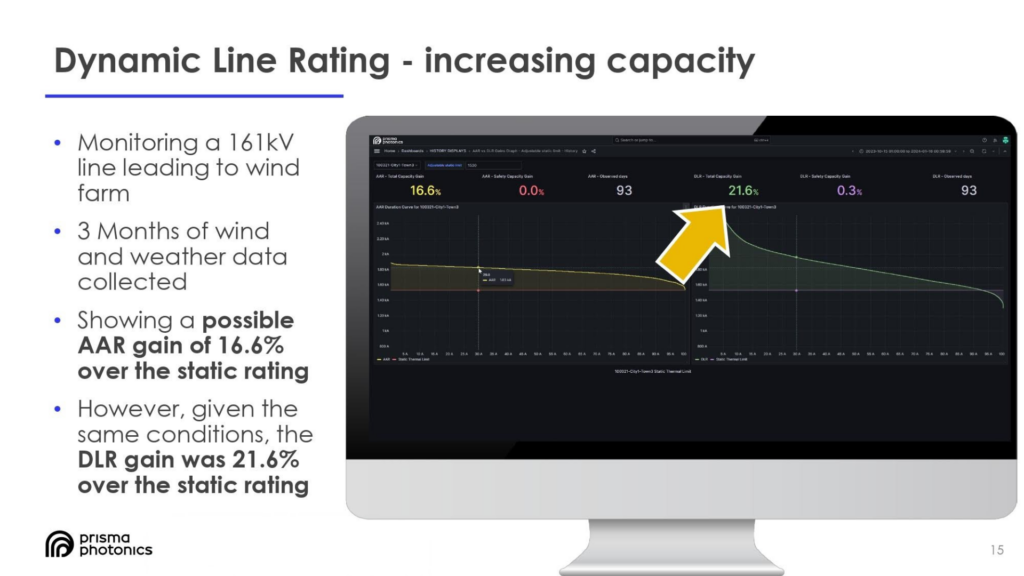
Another approach worth mentioning is Ambient Adjusted Rating (AAR), which adjusts line ratings based on ambient temperature. While AAR offers some improvement over SLR, it still lacks the comprehensive real-time data and adaptability that DLR provides. Analyzing both the real-time data and historical data in DLR, we can better utilize the changing weather conditions to generate more power–and thus increase the grid capacity. Our estimations, when monitoring a 161kV line leading to a wind farm, show a possible AAR gain of 16.6% over the static rating and 21.6% DLR gain under the exact same conditions.
How to Enhance Grid Capacity Using DLR
One great way to enhance the grid capacity is by utilizing optical fiber sensors in DLR.
Continuous Real-Time Monitoring
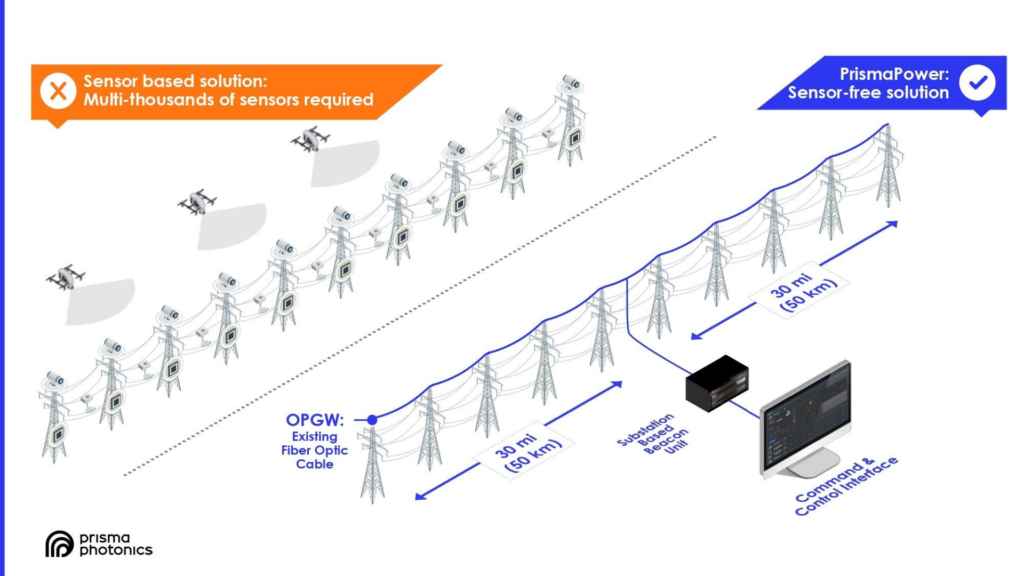
One of the key components of DLR systems is the use of optical fiber sensors. These sensors provide continuous real-time monitoring of temperature, strain, and vibration along the transmission lines. Optical fiber sensors are highly accurate and reliable, ensuring that the data collected is of the highest quality. This continuous monitoring allows for immediate adjustments to be made, optimizing grid capacity in real-time.
Read our case study on detecting ice through powerline monitoring.
Enhanced Accuracy and Reliability
Optical fiber sensors offer several advantages over traditional monitoring methods. They are immune to electromagnetic interference, making them ideal for use in high-voltage environments. Additionally, they can cover long distances without signal degradation, ensuring consistent data collection across the entire length of the transmission line. This enhanced accuracy and reliability translate to better performance and increased grid capacity.
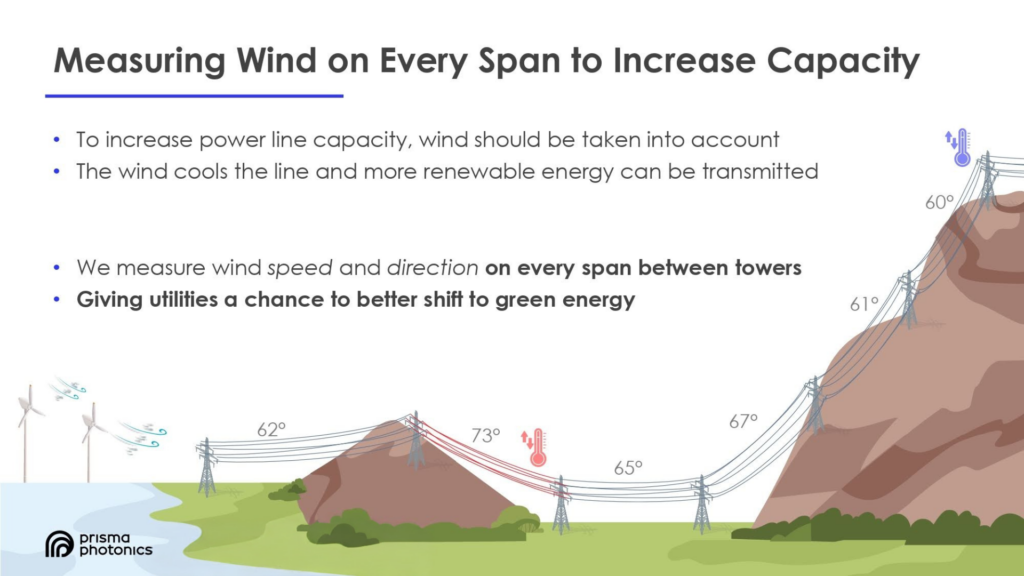
One great example here is the measuring of the wind across the spans between the towers. Wind cools down the lines, allowing for more renewable energy to be transmitted–but with the estimated 5% of the infrastructure actually covered with sensors, we’re unable to accurately measure and utilize the power of the wind. Optical fiber sensors cover the remaining 95% of the infrastructure, giving utilities a chance to better shift to green energy.
Reduced Maintenance Costs
Implementing DLR with optical fiber sensors can also lead to significant cost savings. Continuous monitoring reduces the need for manual inspections and maintenance, lowering operational costs. Furthermore, the improved accuracy and reliability of the data help prevent potential issues before they become critical, reducing downtime and extending the lifespan of the infrastructure.
As the demand for electricity continues to rise, enhancing grid capacity is essential for a sustainable energy future. Dynamic Line Rating (DLR) offers a promising solution by providing real-time, accurate assessments of transmission line capacity. By utilizing advanced technologies like optical fiber sensors, DLR not only maximizes the efficiency of existing infrastructure but also paves the way for a more resilient and adaptable power grid. Embracing DLR is a crucial step towards meeting the growing energy needs of tomorrow.