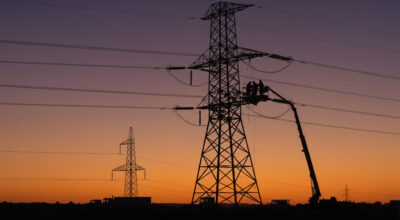


Severe storms are becoming more and more frequent, and the resulting outages are costlier. Grid operators cannot stop storms. However, they can benefit from affordable advanced technology to prevent the cascading effects of a local impact, detect damage in time to repair it before it escalates, and recalibrate load balancing based on continuous data influx.
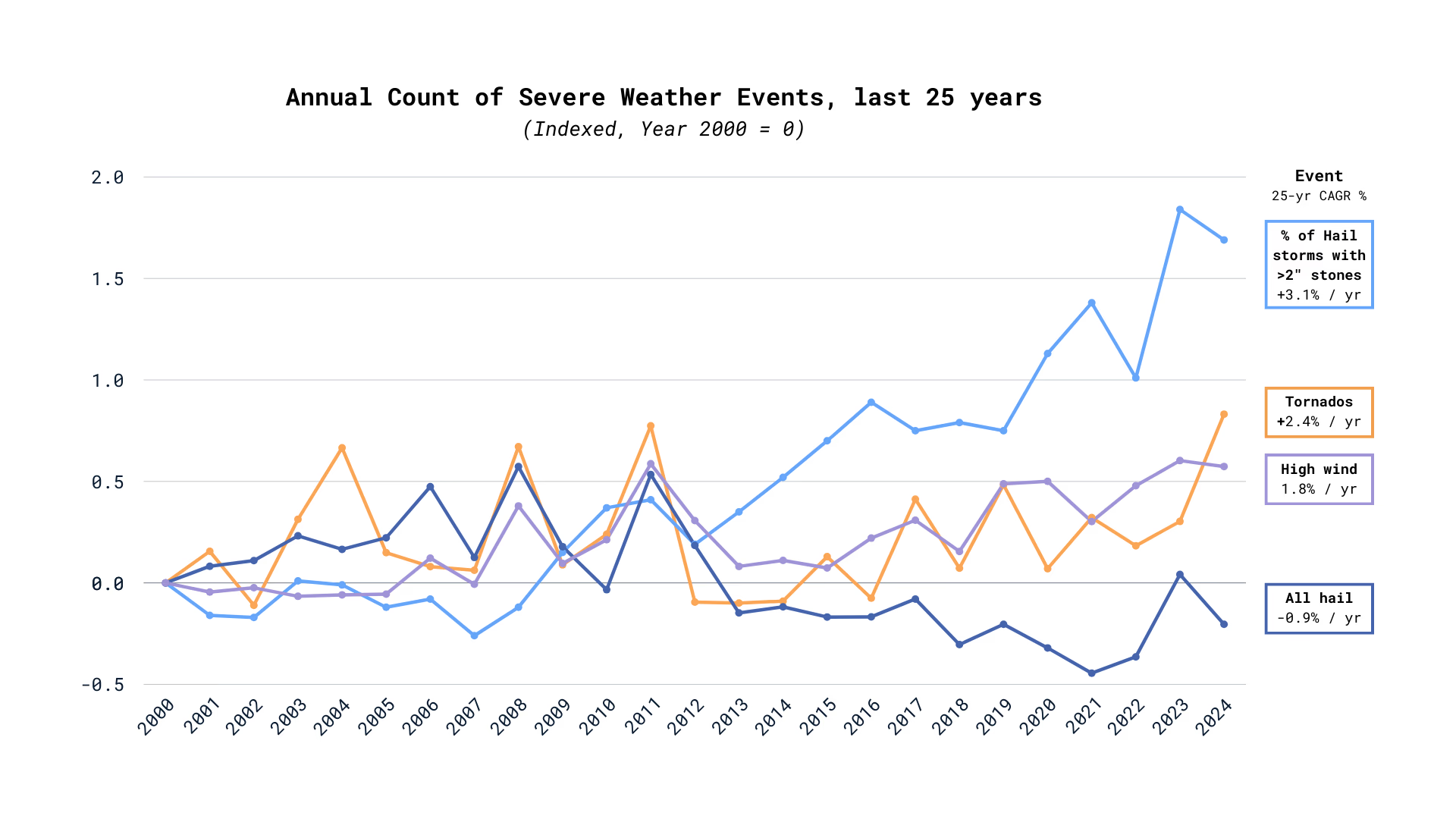
Source: Weathering the Storm: Analysis of Severe Weather Trends
Cost of Storm-Related Outages
As if the rising frequency of all types of storms, from high winds to tornadoes, was not worrying, so is the overall cost of severe storm events. Between 2001 and 2022, the U.S. experienced nearly six times more billion-dollar severe storms than during the previous two decades. A 2018 report by the Department of Energy estimates that outages cost $150 billion a year, not including the cost of grid repairs.
Dr. Frank Hellmann, researcher at the Potsdam Institute for Climate Impact Research, states that “failures of certain lines can trigger large-scale outages affecting whole regions or cities in one major cascade, rather than gradually.”
In May 2025, when the Electric Power Research Institute (EPRI), released a Framework to Address Extreme Weather Risk Assessment and Adaptation, Arshad Mansoor, EPRI President and CEO said that “In just the past three years, there have been 70 confirmed U.S. weather and climate-related disasters — a significant increase over previous years — and whose losses have each exceeded $1 billion. Extreme weather and climate are urgent problems.”
For the Grid, Each Storm Is a Stress Test
Strong crosswinds can cause conductors to swing closer to towers or each other, reducing air clearance and triggering flashovers. Flying debris, such as branches, can cut lines or create micro tears. Eversource Energy outage data for Connecticut shows that more than 80% of outages during storms are due to vegetation management failures.
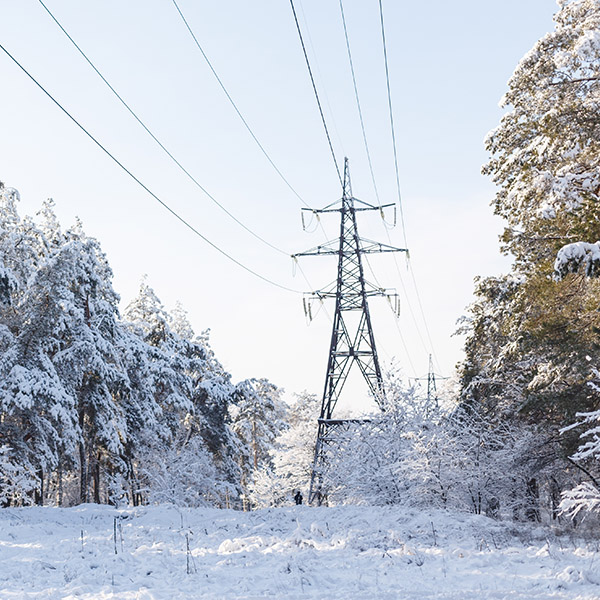
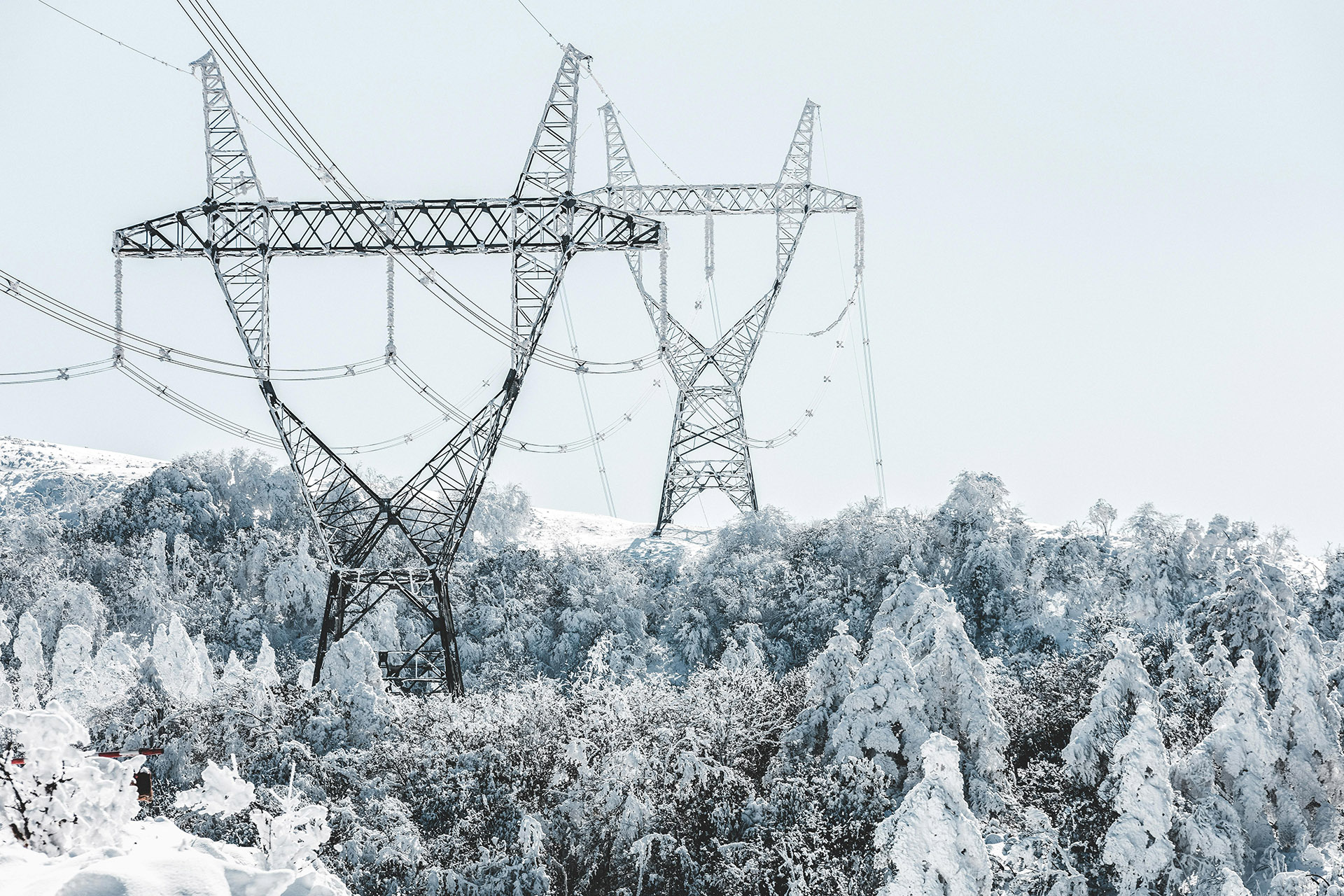
During winter storms, freezing wind result in lines covered in ice and snow, the weight of which endanger the lines’ resilience. The specificity of winter storms’ impact on the grid has already been covered in depth in our blog post, “How to Keep Power Grids on During Extreme Winter Weather.”
The intense currents and heat from a lightning bolt can break down insulators and create very short, sudden spikes in voltage that disrupt the grid and connected equipment. These local damages can rapidly cascade as the local electric overload can propagate along the line, accelerating the overload in more areas.
Once a line segment fails, the connected lines become highly unbalanced, creating a critical dynamic along the line and dramatically increasing loads on neighbouring towers. As multiple segments go down, parallel circuits on the same towers and nearby lines can also trip, leading to multi‑circuit outages.
How to Reduce the Frequency and Costs of Storm-Induced Outages
There are two strategies to minimize the frequency and severity of storm-related outages:
Early detection and repairs
In normal weather conditions, transmission lines are exposed to Aeolian vibrations, a subtle, high-frequency trembling of the wires. Over time, the conductor strands weaken and are at risk of breaking. High winds and stormy conditions exponentially amplify the risk of breakage. Other factors, such as micro tears and vegetation encroachment of the right-of-way perimeter, can also go undetected and threaten the grid’s resilience during storms.
Prisma Photonics technology can detect those threats as they impact the lines, giving operators ample time to send maintenance teams exactly to the affected line locations.
Real-time detection
The immediate danger of high wind is the appearance of bouncing or galloping lines and debris, like tree branches or loose objects, propelled on the lines by wind gusts. Prisma Photonics can detect strong winds and galloping power lines swaying or bouncing in strong winds and monitor every span to increase real-time resiliency. Icing can also become an issue, which could be alerted by the same solution. Prisma Photonics also uses this real-time data ability to optimize line rating, known as Dyanmic Line Rating.
Deployment and Maintenance Costs
Classic monitoring solutions are based on a combination of ground patrol, drones and helicopters, line and tower-mounted sensors, cameras, substation-based fault recorders, and phasor measurement units.
Ground and aerial monitoring are costly and resource-intensive, and ill-suited to severe storm weather. The sparsity of mounted sensors does not cover the entire network, leaving many blind spots, and many of them can’t work in severe weather. Cameras provide a limited view, especially during storms when the wind moves the lines outside the cameras’ angle of vision, and rain or snow limits visibility. Substation-based measurements may fail to account for transmission lines’ condition, so the information they provide is too partial to enable rapid intervention.
Prisma Photonics uses the Optical Ground Wire (OPGW) deployed on more than 50% of transmission networks, transforming the cable into a sensor solution capable of detecting anomalies and damage continuously and in real-time.
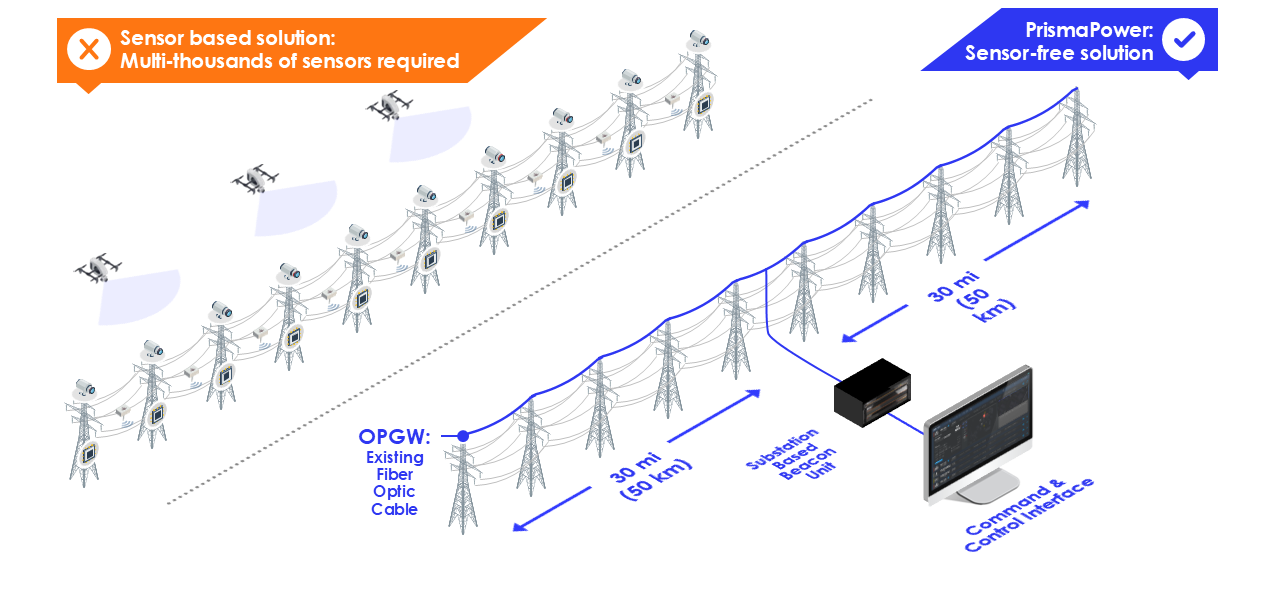
It turns existing infrastructure into a sentient one without requiring costly, resource-intensive, and slow deployment of hardware. It can be deployed within days and could cover thousands of miles of transmission lines. The technology is user-friendly, requiring minimal onboarding.
Within days, it equips operators with:
- Resilience insights into wind, ice, and structural loading
- Instant fault localization
- Faster restoration and reduced cascading risks
- Real-time dynamic line rating, based on the wind measurement on every line span
The result is a storm-resilient grid characterized by situational awareness, which enables the grid to sense, understand, and respond to incipient threats and sudden load variations.
Read more on PrismaClimate, our extreme weather solution, part of the PrismaPower suite.